Virtual reality (VR)
Explore a simulated digital environment. Imagine investigating a virtual habitat or testing an idea in a simulation.
Browse learning resources
What could you learn in a digital world? Students and educators can explore extended reality (XR): augmented reality adds digital content to real surroundings, while virtual reality creates simulated environments. Discover how Coding, Math, AI, and Cybersecurity support these experiences.
Explore a simulated digital environment. Imagine investigating a virtual habitat or testing an idea in a simulation.
Browse learning resourcesAdd digital content to a view of the physical world. Imagine examining a virtual model on your desk or adding labels to real objects.
Browse learning resources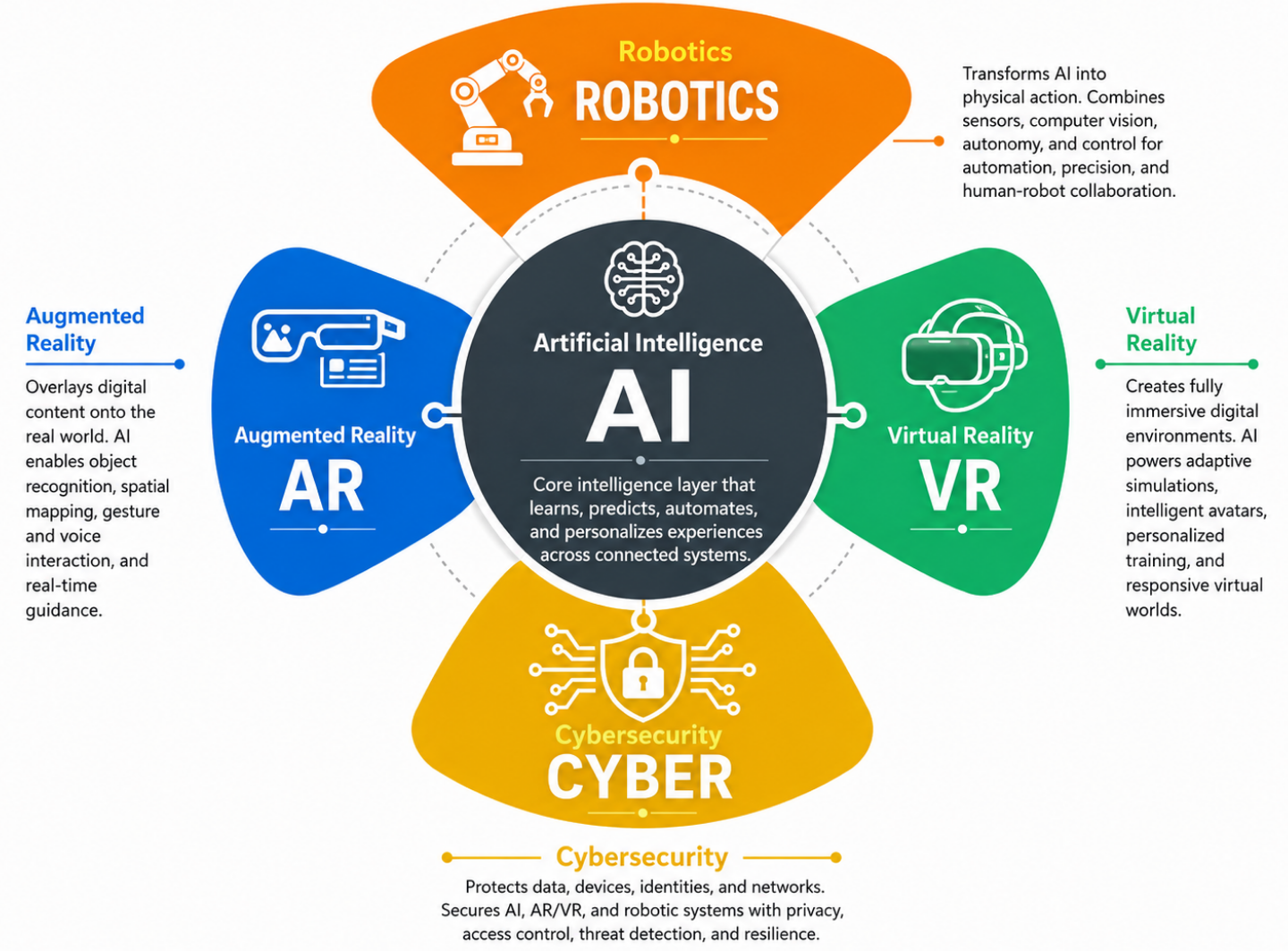
AI can help make digital experiences responsive. Robotics brings code into physical action. Cybersecurity helps protect data, devices, and the people using them.
AR and VR are experiences in their own right; AI can enhance them but is not required.
Explore existing programs ↗Start with questions about virtual worlds, digital models, and creative experiences.
Explore your learning pathDiscuss devices, privacy, age suitability, and healthy use. Follow the requirements for each device and experience.
Visit the parent pathwayConsider how a simulation or digital model could support a learning goal—and how everyone can participate.
Visit the educator pathwayThis is an introduction to a learning area. No XR course, schedule, or enrollment is announced here. Contact Lab Junior to share your interest in future XR learning or a community demonstration.
Ask about XR ↗Rotate this sample cube with the slider. It illustrates viewing a model from different angles; it is a browser demonstration, not a headset or camera-based AR experience.
Model rotation:
Text alternative: A cube has six square faces. Rotating it changes which labeled faces you can see, while the object itself remains the same.